15 Small Backyard Orchard Ideas: Grow Big Harvests in Tiny Spaces
By the Viral Info team · Updated November 2026 · 3 min read
You do not need acres to grow your own fruit. These 15 small backyard orchard ideas show how to grow big harvests in tiny spaces with compact trees, clever training and good planning.
Compact fruit tree options
| Item |
Why it works |
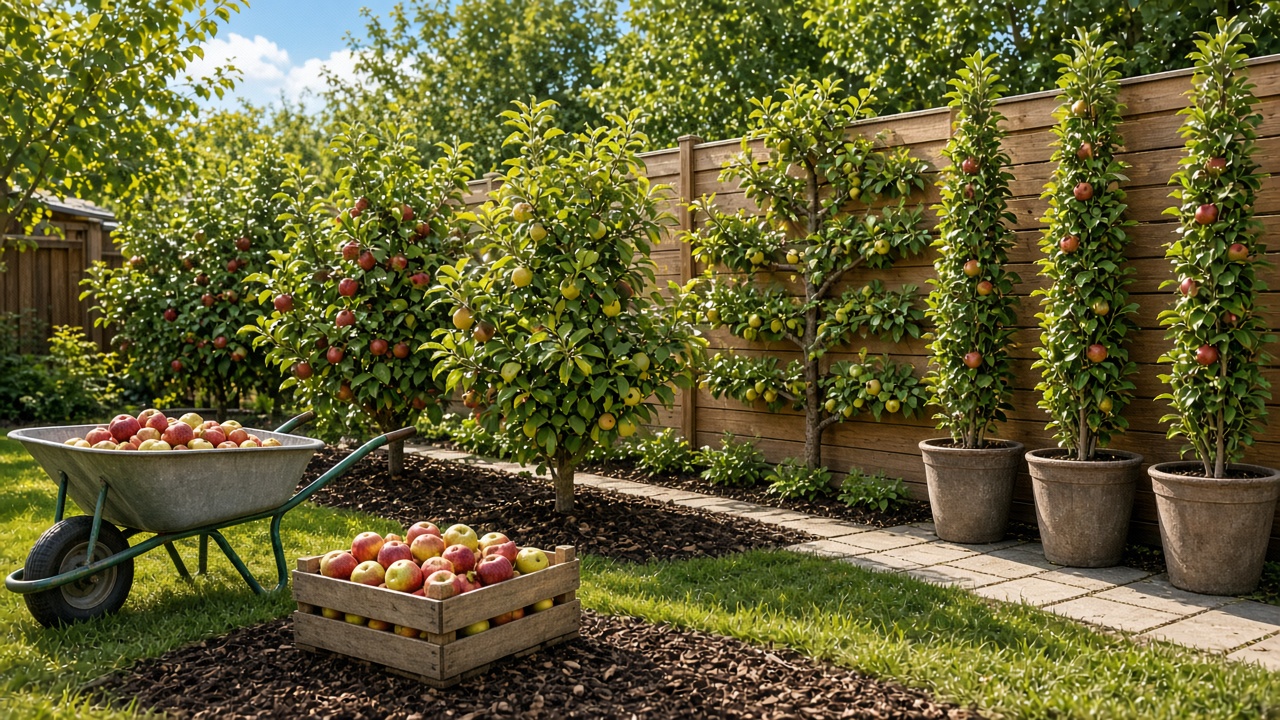
| Dwarf rootstock apple |
About 2 to 3 m tall |
| Columnar apple |
Under 1 m wide |
| Espalier pear |
Flat against a fence or wall |
| Fan-trained fig or cherry |
Wall-grown in a sunny spot |
| Potted citrus |
Container-grown, moved indoors in winter |
Tree forms
- Choose dwarf rootstock trees for easy picking.
- Plant columnar apples in a narrow bed or pots.
- Train an espalier along a fence.
- Grow cordons at an angle in a row.
- Fan-train a fig or cherry on a sunny wall.
- Use stepover apples to edge a path.
Layout
- Plant in a high-density row about 1 to 1.5 m apart.
- Mix early, mid and late varieties for a long harvest.
- Underplant with herbs and flowers to attract pollinators.
- Plant self-fertile varieties or two compatible pollinators.
Containers
- Grow citrus in large pots that can move inside in winter.
- Use half barrels for dwarf peaches and figs.
Care
- Mulch around trunks to keep moisture in.
- Net trees against birds when fruit ripens.
- Prune in summer to keep trees compact.
Tip: Use a stable ladder or long-handled pickers rather than climbing trees, wear eye protection when pruning, follow product labels exactly if you use any sprays and keep them away from children and pets, and check that dropped fruit and pits (such as cherry and peach stones) are cleared where pets roam.
FAQ
How many fruit trees can fit in a small backyard?
Often four to six dwarf or trained trees, sometimes more with cordons and espaliers.
What is the easiest fruit tree for a small garden?
A dwarf or columnar self-fertile apple is a reliable start.
Do I need two fruit trees for pollination?
Not with self-fertile varieties, though many crop better with a compatible partner nearby.
Keep reading