Japandi Interiors Moodboard: Calm, Cozy, and Effortlessly Stylish
By the Viral Info team · Updated November 2026 · 3 min read
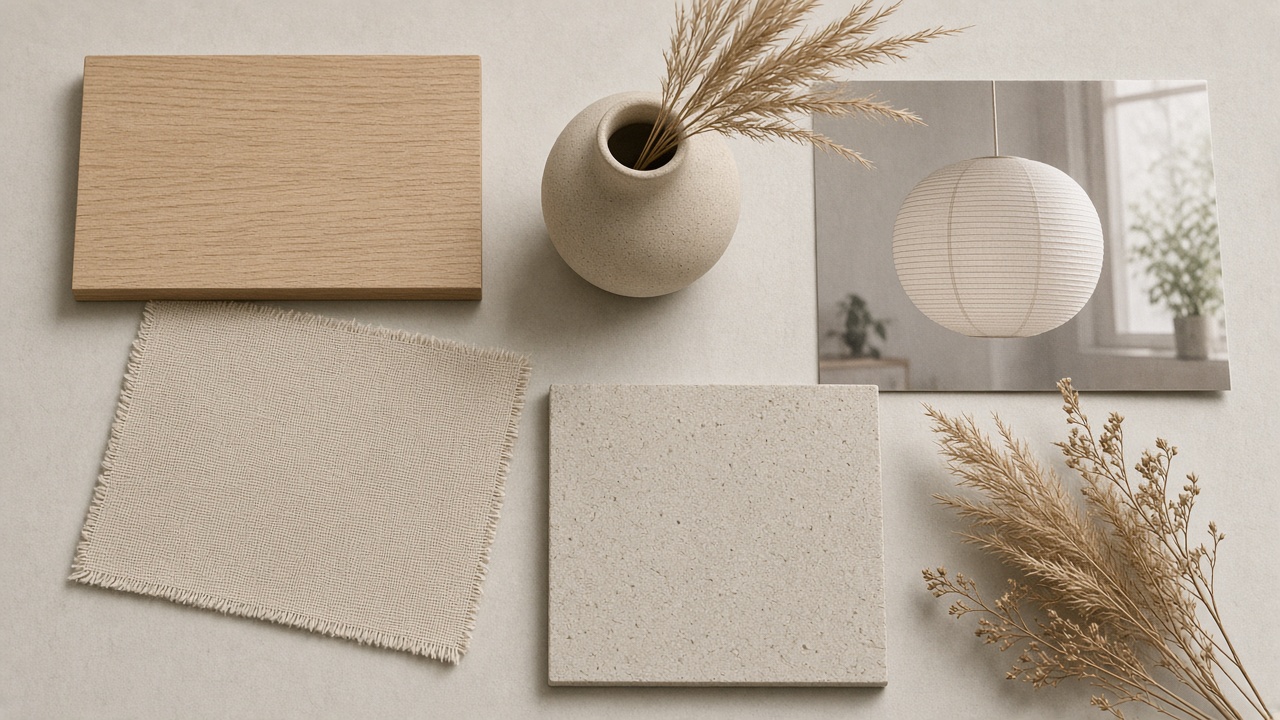
Japandi blends Japanese restraint with Scandinavian warmth. A Japandi interiors moodboard helps you test colours, materials and furniture together before you buy, so the finished room feels calm, cosy and effortlessly stylish rather than cold or empty.
Core moodboard ingredients
| Item |
Why it works |
| Light oak or ash |
Warm, natural base |
| Linen and wool |
Soft texture |
| Stone and clay |
Earthy, tactile accents |
| Paper lanterns |
Gentle diffused light |
| Muted palette |
Beige, greige, charcoal, sage |
Set the foundation
- Choose three main neutrals, such as warm white, sand and charcoal.
- Pick one wood tone and repeat it across furniture.
- Add one accent colour, like muted sage or rust.
Layer materials
- Include linen, wool and cotton samples for softness.
- Add stone, clay or concrete for grounding texture.
- Mix matte and natural finishes, avoiding high gloss.
Furniture and light
- Favour low, simple furniture with clean lines.
- Add a paper pendant or lantern for diffused light.
- Include one handcrafted piece, like a ceramic vase or bench.
Room by room
- Living room: low sofa, wool rug, oak coffee table.
- Bedroom: platform bed, linen bedding, paper lamp.
- Kitchen: flat-front oak cabinets and stoneware.
- Bathroom: stone tiles, wooden stool, simple towels.
Avoid common mistakes
- Do not overfill the board with too many objects.
- Avoid cool, stark whites that make spaces feel clinical.
- Keep plants sculptural, one or two per room.
Tip: Photograph your moodboard in daylight and evening light. Real samples of wood, fabric and paint look different in your home, so test them in the room before committing to big purchases.
FAQ
What colours define Japandi?
Warm whites, beige, greige, charcoal and soft earthy accents.
Should a moodboard be digital or physical?
Both work, but physical samples show true texture and colour.
How is Japandi different from minimalism?
It is warmer, with natural textures and handmade pieces.
Keep reading