55 Kids Room Ideas That Feel Fun and Grow With Your Child (No Annual Redecorating)
By the Viral Info team · Updated November 2026 · 3 min read
Kids grow fast, and so do their tastes. The smartest kids rooms have a calm, flexible base with fun layers you can swap as they change. These 55 kids room ideas cover furniture, walls, storage, play, study and safety so the room can grow from toddler to tween without a full redo every year.
Grow-with-me planning
| Item |
Why it works |
| Neutral base |
Walls and big furniture that age well |
| Convertible furniture |
Cribs and beds that adapt |
| Swappable layers |
Bedding, art and rugs change easily |
| Flexible storage |
Bins and shelves that adjust |
| Safety first |
Anchored furniture and safe cords |
Furniture that grows
- Choose a convertible crib that becomes a toddler bed.
- Pick a full-size bed frame that suits a teen later.
- Use a bunk bed that splits into two singles.
- Add a loft bed with a desk underneath for older kids.
- Choose a trundle bed for sleepovers.
- Pick a height-adjustable desk and chair.
- Use a low dresser that doubles as a changing table.
- Choose solid wood furniture that can be repainted.
- Add a toddler-height bookshelf that later becomes a side table.
- Pick a storage bench for seating and toys.
- Use a reading chair that works for parent and child.
Walls and color
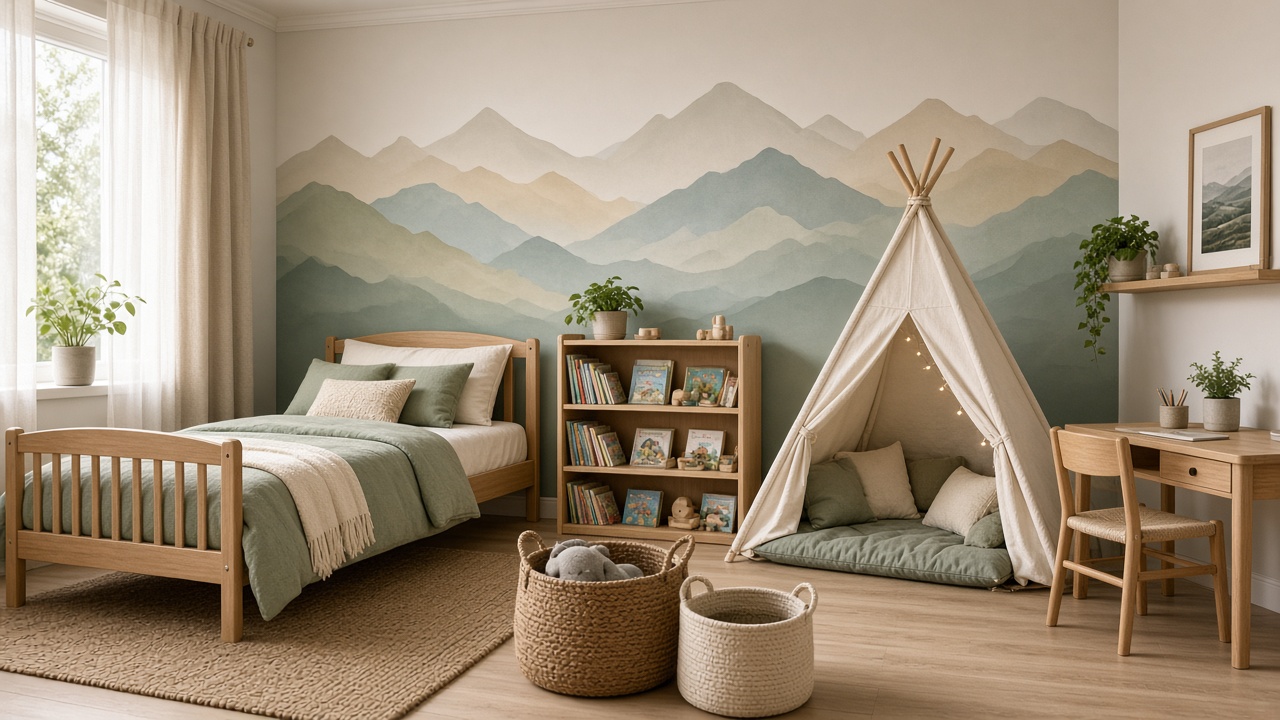
- Paint a soft mountain mural that suits any age.
- Use peel-and-stick wallpaper on one wall for easy updates.
- Choose a calm neutral base like warm white or sage.
- Paint a color block behind the bed as a headboard.
- Add a painted arch to define a play corner.
- Hang a large corkboard for art and schoolwork.
- Use chalkboard paint on part of a wall.
- Create a gallery wall of their own artwork.
- Add removable decals they can choose.
- Paint the ceiling a soft sky blue.
- Install picture ledges for rotating books and art.
Storage and organization
- Use low open shelves so kids can tidy themselves.
- Label bins with pictures for pre-readers.
- Add under-bed drawers for bulky toys.
- Hang hooks at child height for bags and coats.
- Use a toy rotation system so only some toys are out.
- Install a wardrobe with adjustable rails.
- Add a pegboard for craft supplies.
- Use clear boxes for building blocks.
- Choose a lidded toy chest with soft-close hinges.
- Put a laundry basket where clothes come off.
- Store art supplies in a rolling cart.
Play and imagination
- Set up a reading tent or teepee with cushions.
- Hang a canopy over a floor cushion.
- Add an indoor climbing triangle for active play.
- Create a mini stage with a curtain for shows.
- Include a play kitchen or workbench.
- Lay a play mat rug with roads or a map.
- Add a small table for crafts and puzzles.
- Use a swing chair rated for indoor use.
- Build a puppet theater from a bookshelf.
- Make a cozy book nook under a window.
- Hang fairy lights high out of reach.
Study, sleep and safety
- Create a study corner with a lamp and shelf.
- Use blackout curtains for better sleep.
- Add a soft night light with a warm glow.
- Choose washable rugs for spills.
- Anchor every dresser and bookcase to the wall.
- Use cordless blinds to remove strangulation risks.
- Fit outlet covers and corner guards for toddlers.
- Pick low-VOC paint and finishes.
- Keep the bed away from windows and heaters.
- Add a smoke alarm check to your monthly routine for the room.
- Let your child pick one feature, like bedding or a wall color.
Tip: Anchor every dresser, wardrobe and bookcase to the wall with an anti-tip kit, keep blind and curtain cords out of reach and check any bunk bed has guardrails on both sides.
FAQ
How do I make a kids room that grows with my child?
Start with neutral walls and solid, convertible furniture, then add fun with bedding, art, decals and rugs that are easy to change.
What is the best storage for a kids room?
Low open shelves, labeled bins, under-bed drawers and hooks at child height so kids can tidy on their own.
At what age can a child sleep in a top bunk?
Most safety guidance suggests waiting until around age six, with guardrails on both sides.
Keep reading