Outdoor Exhibition Space Design Ideas

By the Viral Info team · Updated November 2026 · 3 min read

Outdoor Exhibition Space Design Ideas

Outdoor exhibitions let art, products and stories reach people in parks, plazas and gardens. These outdoor exhibition space design ideas cover layout, display structures, weather protection and visitor comfort.

Planning checklist

Item Why it works
Weather Shade, rain cover and wind-rated fixings
Circulation Clear one-way or loop routes
Accessibility Step-free paths at least 1.5 m wide
Lighting For evening openings and security
Durability UV-stable prints and sealed timber

Display structures

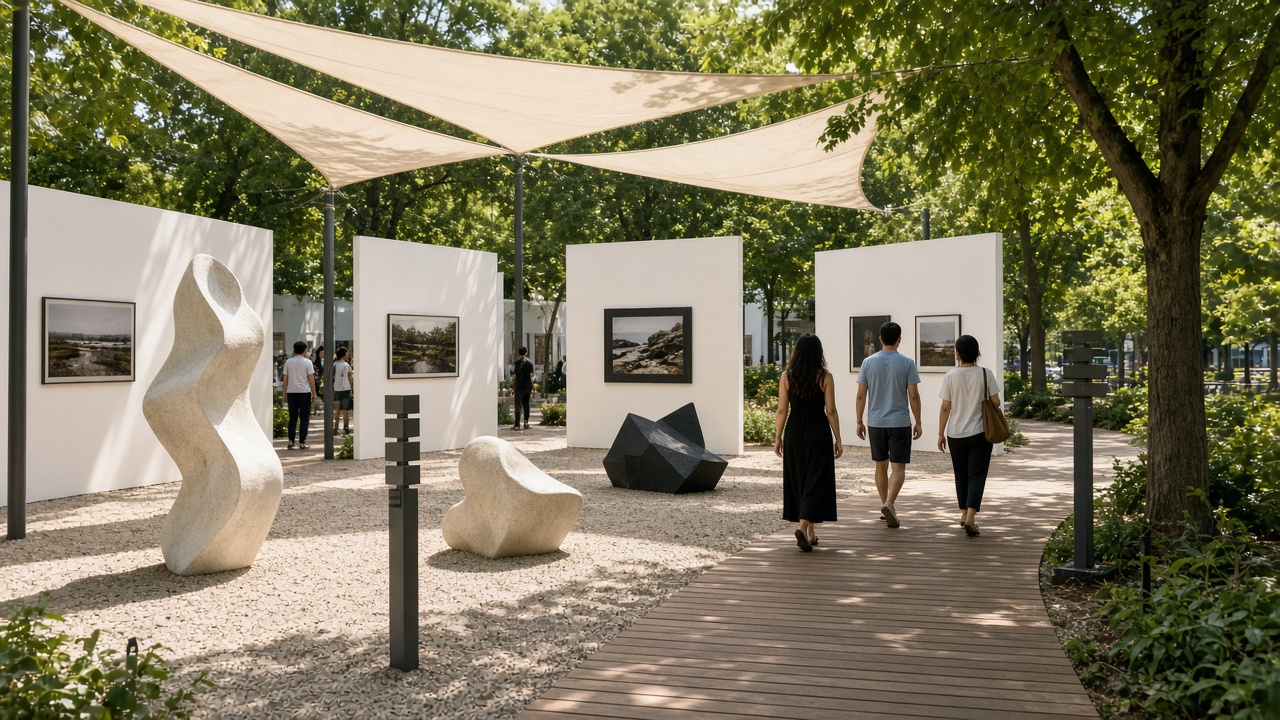
  1. Use modular freestanding panels that can be rearranged.
  2. Build open timber frames to hang prints or textiles.
  3. Repurpose shipping containers as mini galleries.
  4. Use plinths of varying heights for objects and sculptures.

Layout and flow

  1. Create a loop route so visitors see everything once.
  2. Use boardwalks or compacted gravel paths.
  3. Leave open gathering spaces for talks and events.
  4. Frame views of the landscape between displays.

Comfort

  1. Stretch shade sails over key areas.
  2. Add benches at regular intervals.
  3. Plant greenery to soften structures.

Wayfinding and light

  1. Install clear wayfinding posts and maps.
  2. Use solar or low-voltage lighting along paths.
  3. Light key pieces with weatherproof spotlights.

Tip: Ballast or anchor all panels and shade sails for local wind loads and have them checked by a qualified person, keep paths level and step-free for wheelchair users, use outdoor-rated electrics with RCD protection, and plan first aid, emergency exits and crowd capacity with the venue and local authority.

FAQ

How do I protect artwork in an outdoor exhibition?

Use UV-stable prints, sealed frames, covered structures and secure fixings.

What materials work best for outdoor display panels?

Aluminium composite, sealed timber and powder-coated steel handle weather well.

How wide should paths be in an outdoor exhibition?

Aim for at least 1.5 m so wheelchairs and pushchairs can pass easily.

Keep reading

You may also like